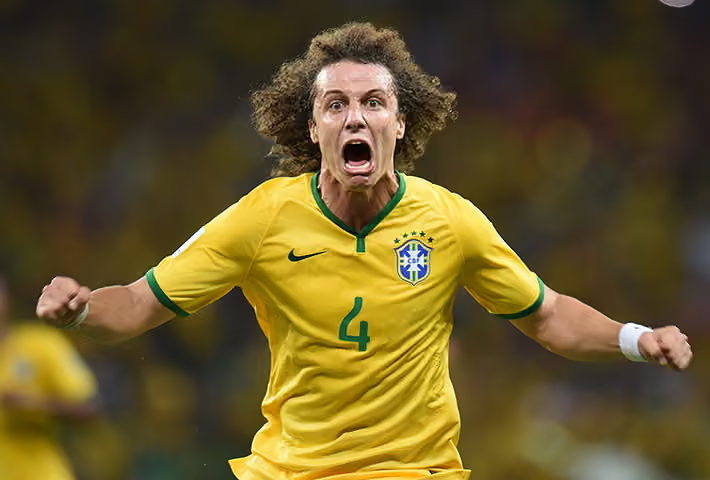
The 2014 World Cup
Find everything you need to know about the 2014 World Cup in one place: the background, the teams, the unforgettable moments, key statistics, legendary stadiums, and the full schedule and results.
Background & history

How Brazil was awarded the 2014 World Cup
In 2007, FIFA officially awarded the 2014 World Cup to Brazil, a country where football is part of the national identity. The event was presented as a return to its roots, 64 years after the 1950 World Cup. This edition took place against a backdrop of high sporting expectations, but also of debates surrounding infrastructure, costs and social impact. Understanding this context provides a better insight into the unique atmosphere that surrounded the tournament.
The qualified teams
Browse the interactive map to find out which teams took part and which groups they were in during this World Cup!
Key moments
Browse this interactive timeline to discover or rediscover the key moments that have shaped the competition

FIFA has officially confirmed that Brazil, the only South American candidate, will host the 2014 World Cup.

The World Cup kicks off in São Paulo with a win for the host nation, thanks to Neymar and a controversial penalty.

In the Netherlands v Spain match (5–1), Robin van Persie scored one of the most iconic goals in World Cup history: a spectacular diving header.

One of the most nerve-wracking matches of the tournament: Brazil progressed on penalties after a Chilean shot hit the crossbar in the 120th minute.

A match that has become a global event, synonymous with a sporting and cultural clash.

Mario Götze scores in extra time to secure Germany’s fourth star.
Statistics


Stadiums

Estádio Nacional (Brasilia)
Capacity : 68,009

Arena das Dunas (Natal)
Capacity : 42,086

Arena da Baixada (Curitiba)
Capacity : 41,456

Estádio Beira-Rio (Porto Alegre)
Capacity : 48,849

Arena Pernambuco (Recife)
Capacity : 42,849

Arena Castelão (Fortaleza)
Capacity : 58,704

Arena de São Paulo
Capacity : 65,807

Estádio Mineirão (Belo Horizonte)
Capacity : 62,547

Arena Pantanal (Cuiabá)
Capacity : 42,968

Arena Fonte Nova (Salvador)
Capacity : 52,048

Estádio do Maracanã (Rio de Janeiro)
Capacity: 73,531

Arena Amazônia
Capacity : 42,374